Beginner Sewing Projects: Everything You Need to Know
Start with a project that teaches one skill, not five
Beginner sewing projects work when they are small, useful, and limited to a short list of skills: a straight stitch, a simple hem, maybe a casing for elastic, maybe attaching a pocket. A first garment with darts, a zipper, set-in sleeves, and a lining is not a beginner project, even if the pattern envelope says “easy.”
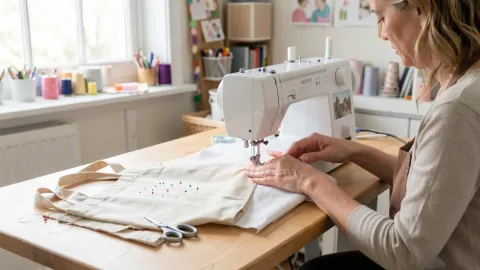
You can sew these first pieces on a basic machine or, in some cases, by hand. A machine makes long, straight seams less tiring. It does not invent the measuring. If you do not yet own a machine, try a class, a borrowed machine, or a short rental before you buy a complicated model. A reliable straight stitch and a zigzag, plus a needle you can change, are enough for a long time.
This is a practical guide to choosing projects, not a set of full patterns, and not a brand review. Fabric widths, thread weights, and machine settings should come from the fabric, the pattern, and your machine manual. When a measurement appears below, it is a starting range you still check with a tape.
Tools you actually need, and the ones you can postpone
A starter kit that earns its space:
- Fabric shears you do not use on paper, and a cheaper pair for paper patterns
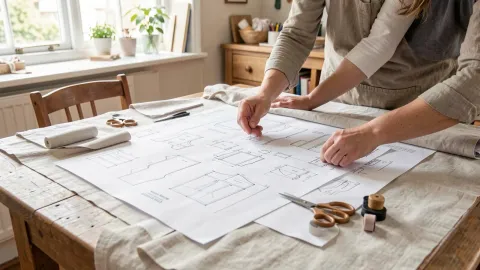
- A measuring tape, a seam gauge or ruler, and a fabric marker or chalk
- Pins or clips, and a seam ripper — you will use the ripper
- All-purpose thread, and extra needles for the machine or for hand sewing
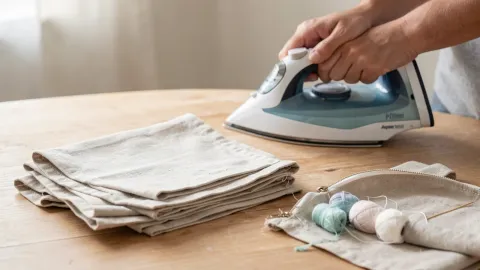
- An iron and a surface you can press on
Nice later, not first: a serger, a walking foot for every project, a dress form, and a drawer of specialty feet. Buy a tool the second time a project actually asks for it.
Fabric for early work should be stable and mid-weight: cotton quilting cloth, cotton-linen blends, or a firm cotton canvas for bags. Avoid very slippery synthetics, thick stacks of denim, and one-way stretch knits until your seams are straight on a calm fabric. Pre-wash the fabric the way you will wash the finished object, then press it, or a carefully cut square will shrink into a trapezoid later.
For beginner hand sewing projects, use a short length of thread, a simple running stitch or backstitch, and a small object: a needle book, a patch, a small pouch with a felted or folded edge. Hand sewing is not a lesser track. It is how you mend, and how you understand a stitch before a machine hides it.
A project ladder, from first seam to first garment
Times are qualitative. An evening is enough for some of these; a weekend is more honest for others, once you include cutting and pressing.
| Project | Skills it teaches | Fabric to start with | Machine or hand | Why it belongs early |
|---|---|---|---|---|
| Simple pillowcase or cushion cover | Straight seams, turning a corner, a hem or an envelope opening | Inexpensive cotton | Machine, or patient hand sewing | Useful, and the seams are mostly straight |
| Reusable napkin or handkerchief set | Even hems on a small square | Cotton or linen | Either | You can practice hems without a large piece |
| Tote bag with short handles | Longer seams, reinforcing a stress point, maybe a pocket | Mid-weight cotton or canvas | Machine is easier | A finished object you will actually carry |
| Elastic-waist skirt | Measuring a waist, a casing, an even hem | Soft, stable cotton, not a slinky knit | Machine | A first clothing piece without a zipper |
| Drawstring bag or gift bag | A channel, a straight tube, turning fabric | Light cotton | Either | Tiny, cheap, and good for leftover fabric |
| Patch or mending on clothes you already own | Matching thread, a small even stitch, pressing | The garment plus a scrap | Hand, or a machine zigzag | The most frugal sewing habit you can build |
| Simple apron | Ties or a neck loop, a pocket, a hem | Cotton | Machine | A wearable item that does not need a close fit |
| Basic zippered pouch, later | Inserting a zipper neatly | Cotton | Machine, once straight seams feel boring | Postpone until the first five rows feel easy |
Simple sewing projects and “ideas for sewing projects” lists often jump from a scrunchie to a lined jacket. Stay on the ladder. A scrunchie is a valid tiny project, and it teaches a casing, but it is easy to lose patience with a very small, stretchy loop. A napkin will teach you more.
Beginner sewing machine projects should use a stitch length you can still rip out, a seam allowance you mark, and a test scrap of the same fabric before you sew the real edges. If the fabric bunches, change the needle, check the threading, and slow down. Fighting the machine will not make a tote bag nicer.
Beginner clothing sewing projects, when you are ready, should have few pattern pieces and a forgiving fit. An elastic skirt or a simple apron is a better first garment than a close-fitting shirt. If you want a garment immediately, pick a pattern labeled for novices and read the outside of the envelope: if you cannot picture each step, it is not your first pattern.
DIY sewing projects made from clothes you already have — shortening a hem, replacing a button, taking in a loose pillow — count. They save money, and they use fabric you already liked.
A checklist before you cut
- The project needs only skills I have, or one new skill
- The fabric is washed, pressed, and stable enough
- I have enough fabric for the pieces plus a little margin
- I have marked the seam allowance, not only the cutting line
- The machine is threaded correctly, with a new or undamaged needle, or I have a comfortable hand needle
- I have pressed as I go, or I have a plan to
- I am willing to rip a seam and redo it, rather than “make it work” with a wrinkle
Cut once you can check those boxes. Cutting is the expensive moment. Sewing is the reversible one, within reason.
A note on budget: a small stack of remnant cotton and a few spools of thread will teach you more than a large order of designer fabric. Save the special cloth for the third or fourth finished object, when your cutting is more accurate. If a project needs a zipper, buy one zipper, not a set of twelve colors.
Questions beginners ask before the first project
What is the best first beginner sewing project?
A square or rectangular object you will use: a pillowcase, a set of napkins, or a simple tote. You will practice straight lines and pressing, and you will finish something in a short time. A fitted garment can wait.
Do I need a sewing machine to start?
No. Beginner hand sewing projects — patches, a small pouch, a hem — are real sewing. A machine is worth it when you want longer seams and you will actually use it. Try one before you buy a model with features you cannot name.
What fabric should I buy first?
A mid-weight, non-slippery cotton in a color you will not mind wasting on a mistake. Avoid stretch knits, satin, and heavy denim until your seams look even on cotton. Pre-wash it.
How do I stop beginner projects from looking homemade in a bad way?
Press every seam. Trim loose threads. Keep seam allowances even, even if that means unpicking one side. A simple object sewn neatly will look better than a complicated object sewn in a hurry. If a corner is messy, slow down on the next corner rather than adding decoration to hide this one.